summary
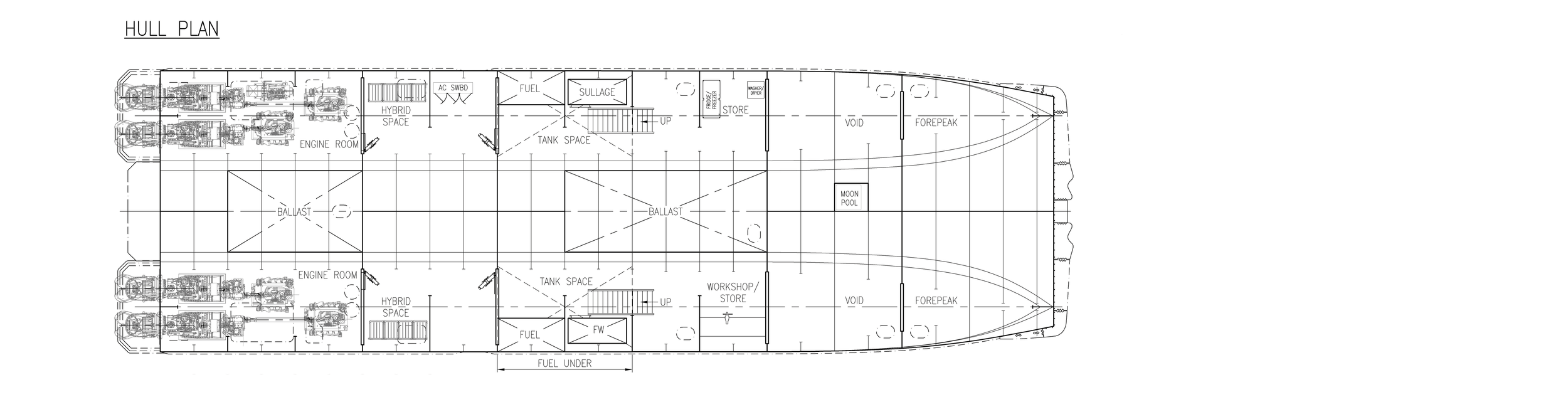
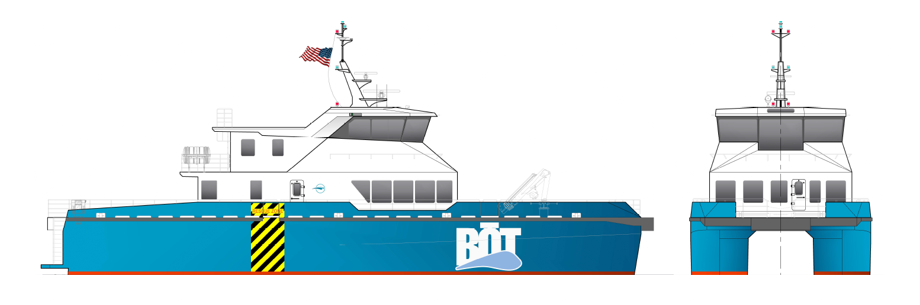
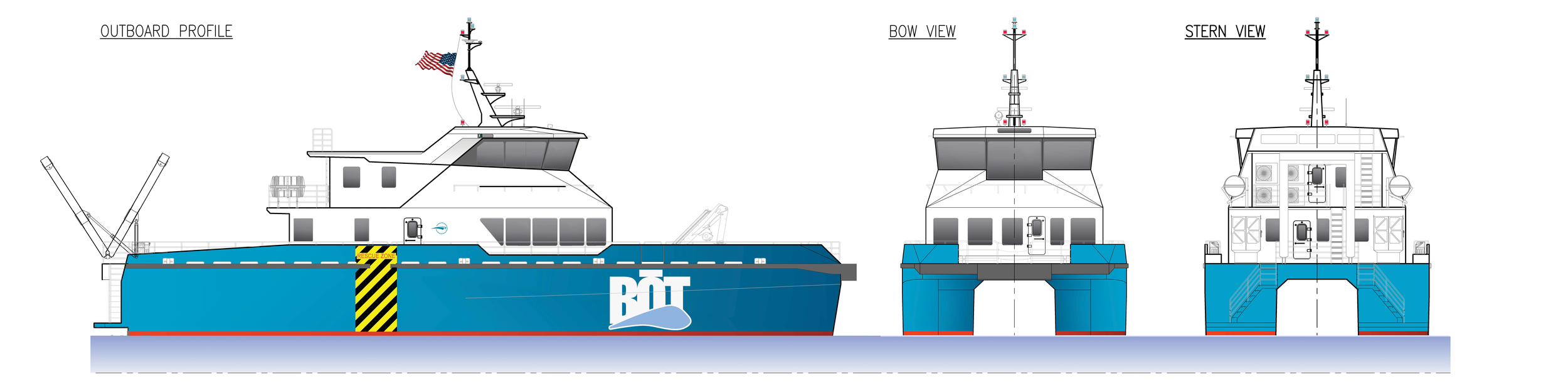
Blue Ocean Transfers (BOT) offers a 34-meter aluminum catamaran multi-purpose vessel platform with a fast, stable and standardized hull structure for offshore transit, transfer and support services. With a configurable deck and superstructure to support mission requirements, the platform can be utilized in multiple offshore markets including energy, research, survey, aquaculture, military uses, and so on.
BOT vessels are designed by Incat Crowther who were selected for their robust, durable design and vessel operating characteristics, along with significant local supply chain experience in the US, enhancing the reliability of their designs. The BOT asset offers comfortable high-speed transits when required and a quiet, stable work platform at lower speeds.
These high-speed aluminum catamarans will provide transit and transfer of offshore personnel, gear and equipment to coastal and regional offshore infrastructure. The 25 to 30-year lifespan of the vessel means that it can support all phases of offshore project development - from survey and research to installation, operations and maintenance (O&M), all the way through decommissioning. Missions supporting the construction and/or operation and maintenance of offshore installations are fully sustained by fast, safe, comfortable and reliable transportation. Charters of various durations can include 12-hour daily or 24-hour deployment for up to two weeks.
These will be US-flag Jones Act vessels - US-built, crewed and operated by US seafarers and majority-owned by US citizens. The vessels can be delivered with parallel hybrid electric propulsion to reduce fuel costs.
US flag
IACS-classed
Jones Act Compliant
Hybrid propulsion
USCG Subchapter L, T, I, U
VESSELS
EXPEDITION VERSUS EXCURSION CLASS
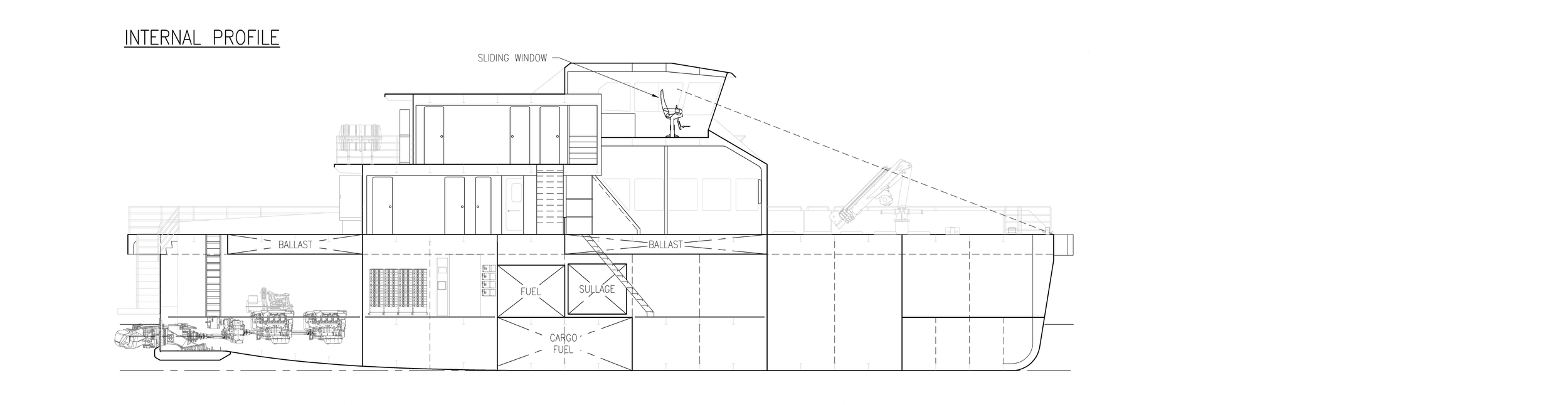
The BOT vessel platform is crewed for 24/7 deployment with endurance of up to two weeks at sea. Crew cabins are located on the upper deck aft of the pilot house.
Two classes of service are available to address the mission requirements for different market deployments. These define the configuration of the main deck accommodations area and exterior main deck forward and aft for short trips and longer deployments.
EXPEDITION CLASS
The Expedition Class is configured to support extended stays offshore or away from home port. Onboard accommodations are designed for 10 technicians, scientists or other passengers for up to two weeks offshore. Work and leisure spaces are prioritized on the main deck. The Expedition Class is well suited for in depth survey and research work or extended operations & maintenance campaigns.
EXCURSION CLASS
The Excursion Class is designed primarily to transport technicians, scientists, offshore energy workers or other passengers to and from offshore sites on a daily basis. Seating for up to 50 transit passengers is prioritized on the main deck with additional workspaces configured for the mission, a galley/lounge area, changing areas and restrooms. The Excursion Class is well suited for daily data collection, educational trips, large group events and daily transits/transfers of personnel, gear and equipment to and from offshore sites.
Markets
The BOT vessel is designed for deployment into multiple offshore market opportunities: A standard below-deck hull structure, propulsion and machinery configuration supports efficient series construction of multiple units. Main deck and superstructure outfitting customization provide for specific mission requirements across markets. The result is an affordable US flag support vessel available for service across offshore markets including:
Crew Transfer Vessel (CTV) in the offshore wind space
Fast Support Vessel (FSV) in the oil & gas and marine energy sectors
Survey/Research Vessel (SRV) for oceanographic studies
High Speed Aluminum Catamaran
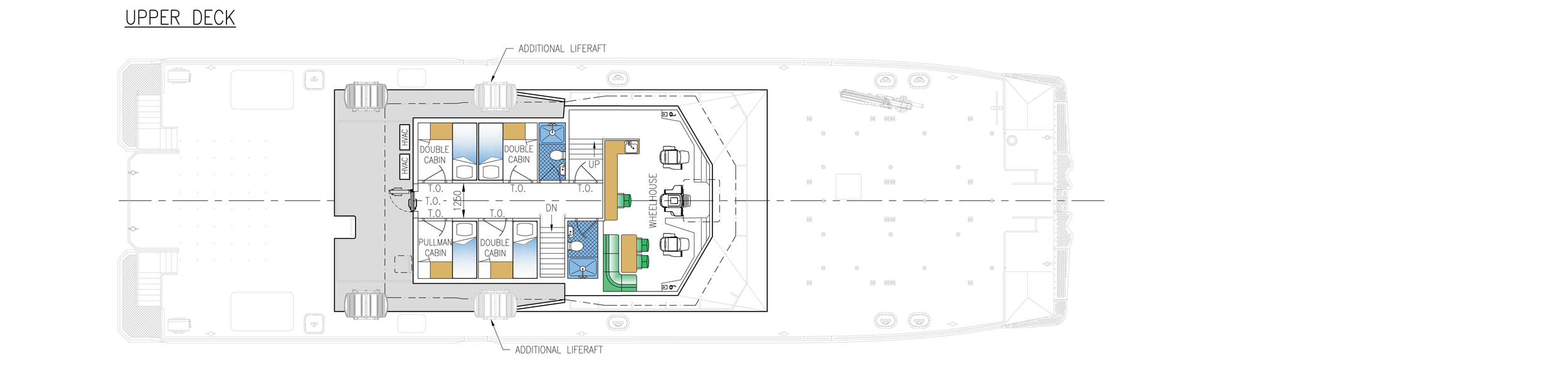
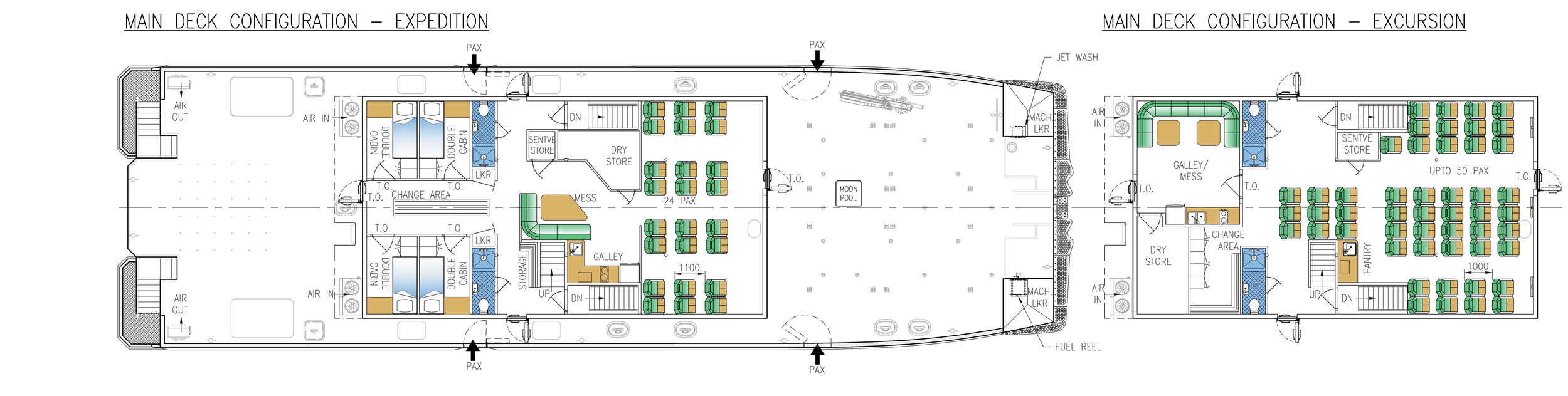
Above: Configured as a crew transfer/fast support vessel capable of a 2-week deployment, the Expedition Class layout (left) includes overnight accommodations for up to 10 personnel in addition to the crew via main and upper deck cabins, along with 24 passenger seats forward. Alternatively, the Excursion Class layout (right) can transport up to 50 passengers.
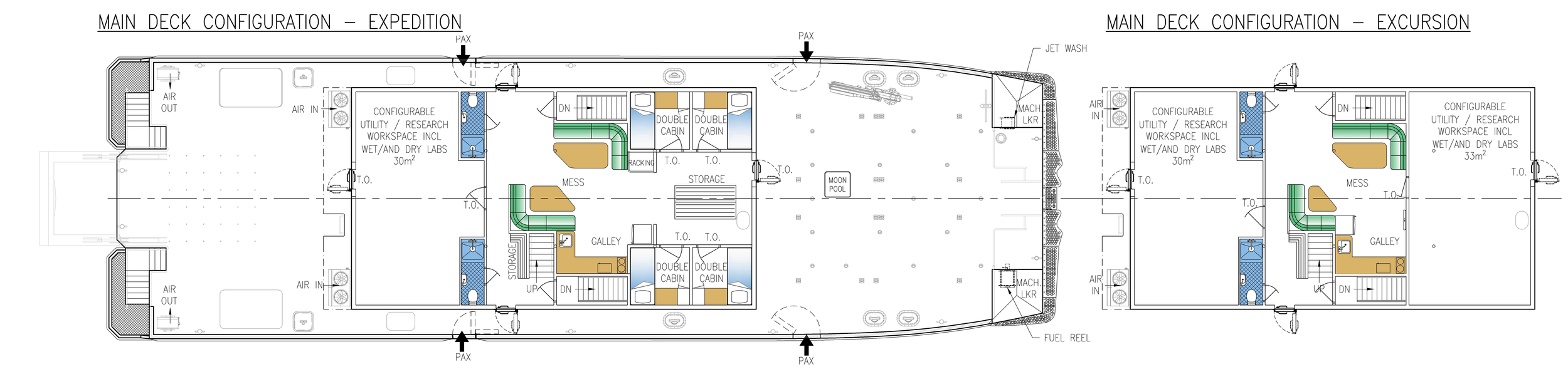
Above: Configured as a survey/research vessel, the Expedition Class layout (left) includes a configurable workspace aft and overnight accommodations for up to 10 personnel in addition to the crew via main and upper deck cabins, while the Excursion Class layout (right) increases interior space for laboratories/workspaces and classrooms.